Opening image: The ducks are the stars of episode one. “They’re manure machines,” says Heath. “And I love ‘em for it.” Photo Andrew Buckley

Sea to Soil: Heath Joske's Decade in the Dirt

Heath Joske is on his way to pick up some chicken feed when he answers the phone. “It's a bit of a mix,” he says of the feed, dryly. “It's mainly wheat screenings, so there's a lot of husky, chaffy stuff in there with some grain amongst it. There's wheat, there's lentils, a bit of weed seed in there. Not marijuana seed,” he clarifies, “but I’m sure the chooks wouldn’t mind.”


The chooks and the ducks are the stars of Heath’s new series, Sea to Soil, which launched last week, following daily life on his farm down on South Australia’s Eyre Peninsula. “I've had a few friends text me saying they really enjoyed the first episodes... the feedback's been really good. It’s inspired them to go buy some ducks.”


A decade ago now, the former pro surfer from the NSW North Coast green belt moved down to the dry and dusty Great Australian Bight with wife Eliza, to raise some kids, raise some chooks, and grow some vegetables. 


“I'd really fallen in love with the coastline down here and had decided this is where I wanted to set up,” he recalls of the time. “I was pretty keen to get a patch of land, a reasonable acreage out of town, so we started looking around. I'd been looking for maybe a couple of months when I thought I'd give my mate a call.”


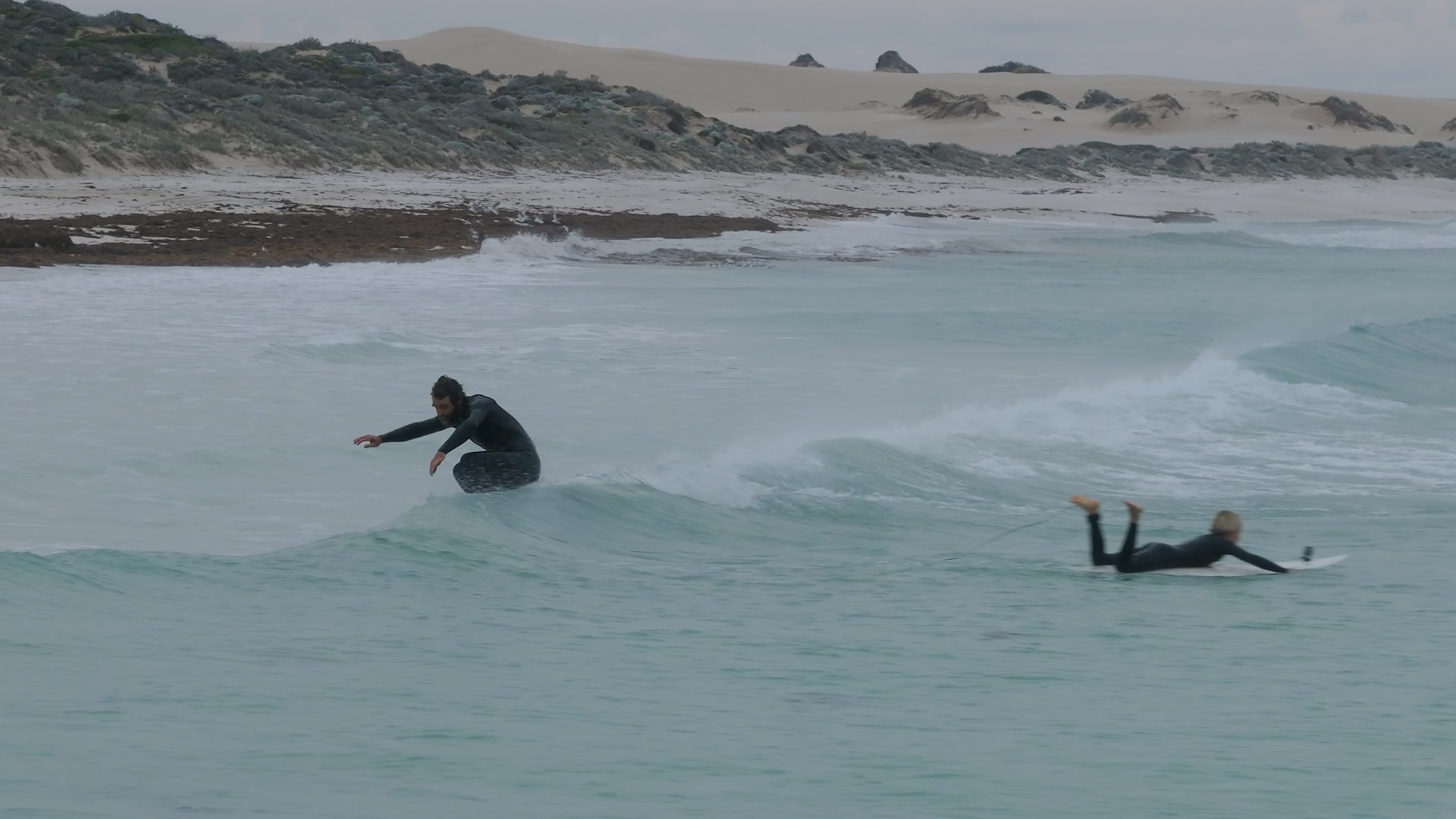
That mate had just split a large block a couple of sand dunes back from the coast and was selling it. Heath and Eliza did a walk around the property and fell in love with it immediately. “It was when I got up the top of the hill and saw that beautiful view over the whole bay with the two sets of bombies on either side,” he says of the moment they knew this would be home. “It's got national park between us and the coast, and it’s surrounded by salt lakes that wrap around us. It's an incredibly magic spot. The whole assessment process of which land was suitable however came down to its proximity to my favourite wave,” he laughs.


While the view was sublime and the waves were good, the land itself was scratchy. 
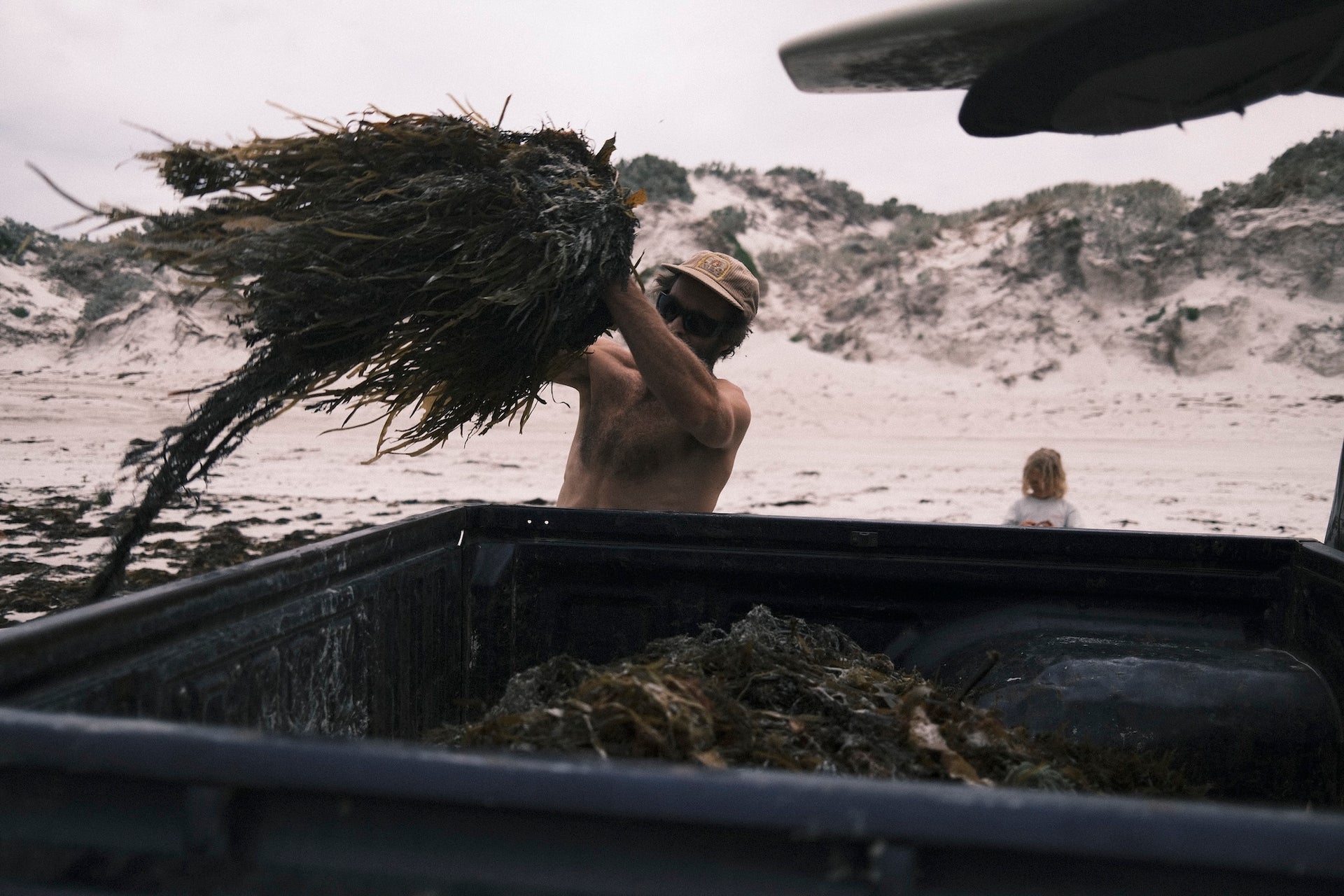
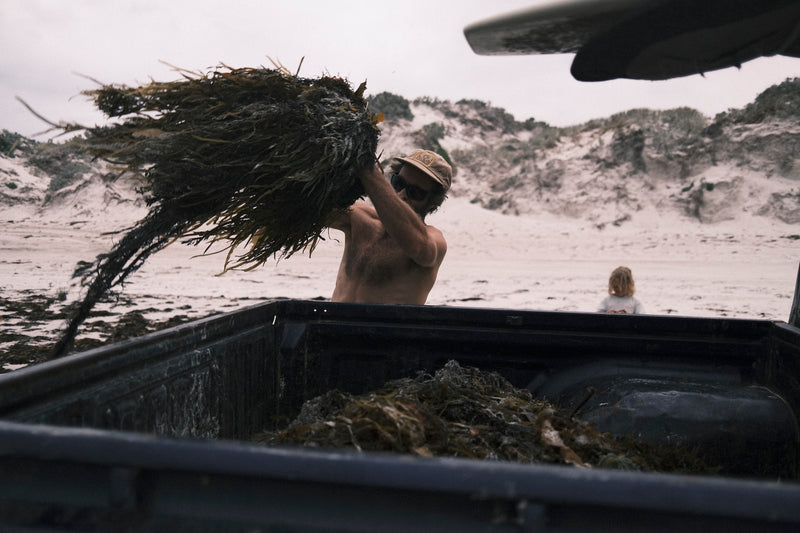
Looking for organic matter to nourish his gardens, Heath didn’t have to go far. Photo Andrew Buckley

Like most of the Eyre Peninsula it had been cleared decades earlier, then used for grain cropping and grazing by sheep. The soil on the property was sandy, stony and dry and not good for growing much at all. “There were a couple of patches of mallee still on there,” says Heath, “but the paddocks were all pretty rough. I built the house in amongst the one little patch of mallee trees and then started planting fruit trees and building chicken runs and veggie beds and sheds all around it. Everything got built around those trees.”

But this wasn’t the North Coast where you simply scatter seeds into moist, fertile soil, walk away and go surfing, and let nature do the rest. Life on the farm down here was tough. “It’s a challenging place to grow food,” says Heath, typically understated. "It's a challenging place to grow anything really. If I knew then what I knew now, I would’ve bought somewhere that had heavier soil, not fluffy sand. I'd think about getting somewhere that had a reliable water source.”

But the Joske family has always liked a challenge, so Heath got stuck into it.

“I'm thankful that I went so hard during those first eight years,” he offers. “Every day I was head down, bum up and just going for it, making a lot of mistakes, but learning from those mistakes. I planted 20 baby figs and a mulberry tree and a couple of olive trees close to where the orchard is now... and slowly watched them all die over the next six months.”

He knew his work needed to start from the ground up. “I realised, okay, I need to put a lot more effort into this soil. There's nothing left in it. It’s pretty dead, I need to bring it back to life. I need to bring in organic material. I knew it was going to need a lot of love.”

Heath got stuck in. “It's kind of the way I live my life,” he says. “I rarely pop up to smell the roses or taste the figs or just have a walk around. I'm too busy doing stuff to appreciate where I've got to, but every now and again, I slow down and look around at everything and think, far out, there's a bit going on here. You see the fruit trees or the veggies or even the weeds just looking so much healthier every year. You see the life returning, you see worms coming back, you see the birds starting to come back, and just those little things that keep getting better and richer. That’s more than enough to keep you frothing to get out there.”

“I'm not going as hard as I was a couple years ago now because my eldest son [Ziggy] is nine and he just wants to go surfing all the time.” Photo Andrew Buckley

Heath comes from a gardening family – namely his mum, Jenny – and feels like he’s carrying on a family tradition, just on very different country. “I feel like I'm sort of taking one for the team,” he says, “trialling all this stuff and failing a bit while definitely having some wins too. It's been a hard graft at times for sure, but I'm looking forward to being a granddad one day and seeing Marlow [Heath’s youngest son] really take on all that knowledge. He should be all over it. He already knows more than me about gardening in this climate. It's awesome to see him take such a big interest in it so early on.”

Jenny Joske, meanwhile, has moved in down the road with Heath’s dad, Paul, and already she is showing Heath how things are done in a dry climate. “My folks have a little shack, and Mum’s got spinach that's green and lush even though it hasn’t been watered all summer. It looks better than the spinach in my shade house. We haven't had a drop of rain since the first of December but Mum’s spinach is healthy because it's growing underneath the mallee trees. Everyone says you can't grow stuff under mallees because they rob all the water and all the nutrients, but Mum is making it work. It’s like magic.”

After almost a decade of hard toil to get his garden humming, the rewards now for Heath happen daily. “Once you harvest your own tomatoes or you're going out and getting your eggs of an afternoon, or your spinach or greens from the patch every day, it's pretty hard going to the supermarket to get that stuff. Once you're exposed to growing your own food and eating your own food, it's just so much more superior than anything you can buy from the shops.”

Heath has also realised that while he’s lived a hard gardening life, the garden isn’t his whole life. “I'm not going as hard as I was a couple years ago now because my eldest son [Ziggy] is nine and he just wants to go surfing all the time. There was a period where I just prioritised growing food in the garden over everything else, and it got to a point where I had to slow down. It wasn't really healthy or sustainable in that family dynamic. So, where I'm at now is trying to get everything as streamlined as possible – minimal input for maximum reward. Let nature do the work. I've still got that much shit going on, but every now and again, I do a couple of jobs and end up at top of the hill, and I catch the green flash sunset, and I see that old magic. I'm like, ‘Oh, that's why I bought this block.’”

Sea To Soil Episode 01

Opening image: The ducks are the stars of episode one. “They’re manure machines,” says Heath. “And I love ‘em for it.” Photo Andrew Buckley

Subscribe

God Creates Dinosaurs. God Destroys Dinosaurs. God Creates Man. 
Man Destroys God. We Create Roaring Journals.

Related Stories Related Stories Related Stories Related Stories Related Stories Related Stories Related Stories Related Stories Related Stories Related Stories