
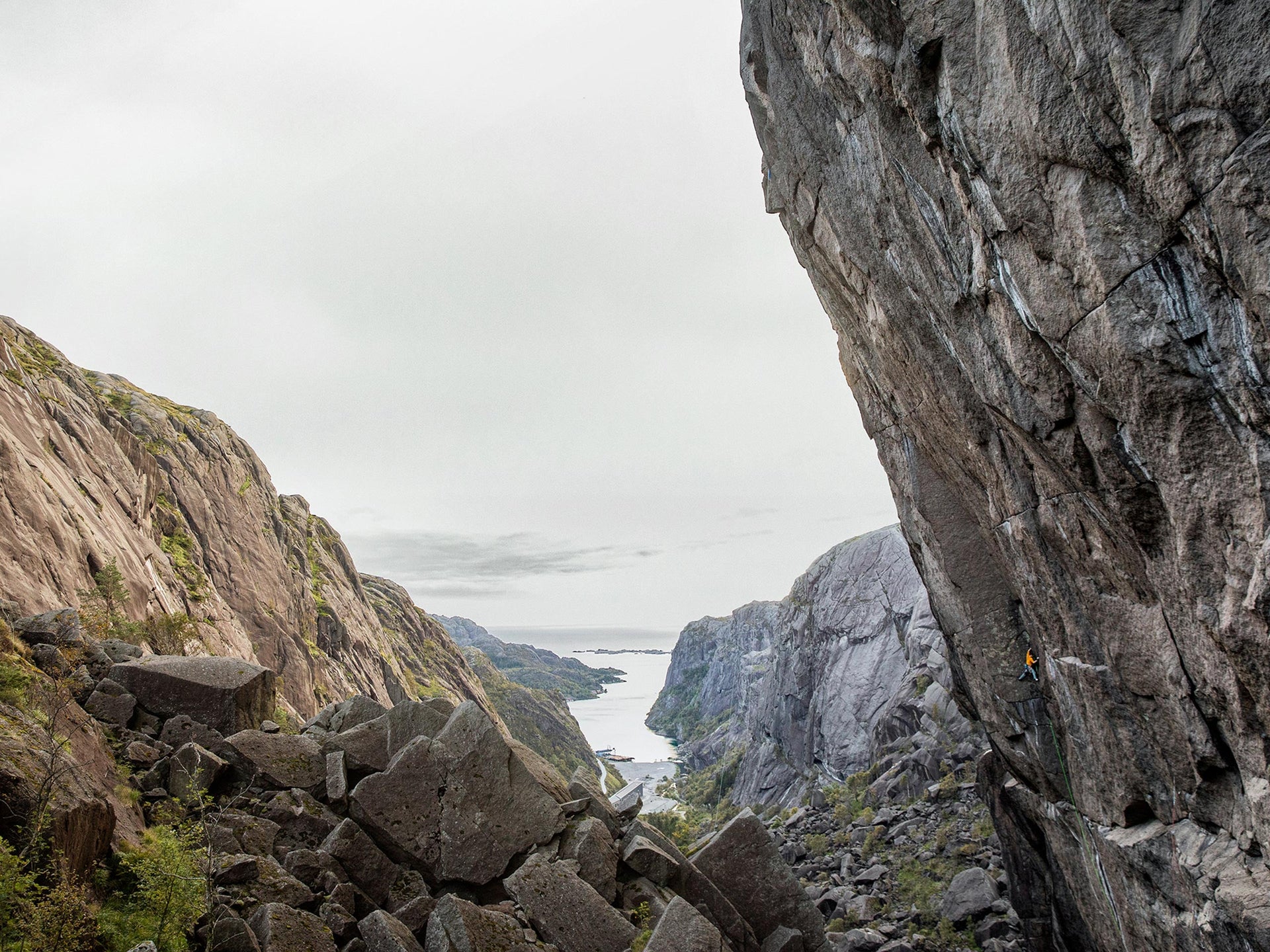
All photos by Andrew Burr
Somehow I’d clawed my way to the rest. I inverted my feet above my hands, jammed them in the crack and hung upside down, dangling my arms below my head to drain the lactic acid from them. Honestly, I wasn’t expecting to be here. From the outset, I’d barely stayed on the climb. Every move had felt like a gamble, a calculated risk. Not a risk of injury or death, as this route was completely safe, but a risk of failure. Failure, and the dreaded thought of having to climb the bouldery start again. We’d just had nearly two weeks of rain and even getting on to the climb had been tedious.
From my upside-down resting position, my thoughts moved on to the section above. There was no point in thinking about the lower section anymore. That was done, finished. Yes, it had taken mountains more energy than I had hoped it would, but realistically, I shouldn’t be here anyway. I should have fallen ages ago. I’d come through the thumb sprag, the layback and the cupped hand jam. Each of those holds was a fragile link to the next move I was sure should have broken, yet hadn’t. I’d been given a second, third and fourth chance to be here in the hanging rest, and I felt like I deserved it.
The next section—the third crux of the route—is a boulder problem of face holds and jamming. It is difficult to mix face and crack climbing, as the pump in your hand from jams affects your ability to hang onto small edges. I’d need to shift my climbing style, but my hand and forearm were already numb from the previous 50 meters (164 feet) of climbing.
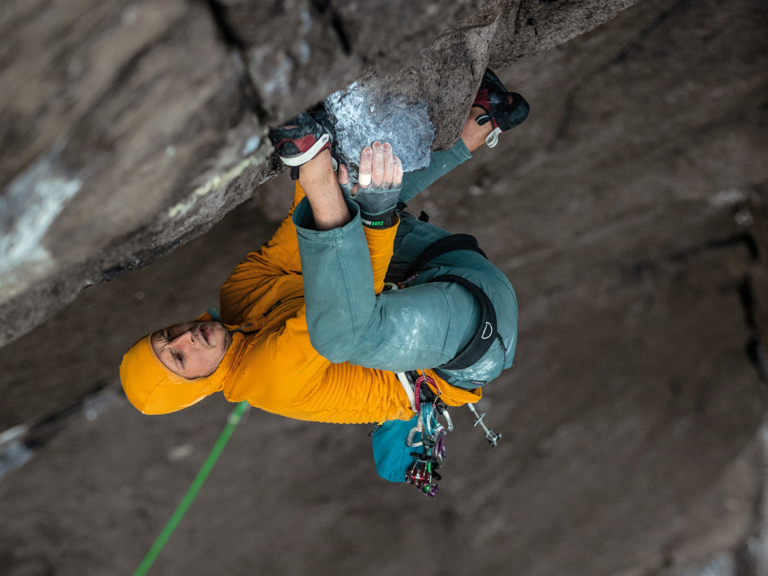 The rest before the redpoint crux. Being comfortable in upside-down foot jams is very helpful for relaxing in such a position. Jøssingfjord, Norway.
To make things worse, rock conditions were awful from Norway’s humid sea air, and the next hold was a sloper that needed care to grab correctly. Most importantly, it needed friction. With friction, your skin can bite into two important crystals that almost make it feel good. Without friction, you’d barely know the crystals exist and the hold jumps out of your hand like a slippery bar of soap.
I tried to relax as much as possible. I knew I was staying in the rest too long, but my arms were lactic acid-filled lumps of meat. As my arms started to recover, my legs started to go numb. Soon, the only feeling I’d have in my toes would be a tingling sensation when I needed sensitivity to feel the edges I would be standing on next.
I swung right-side up, shook some blood into my legs and went for it. Not a single crystal dug into my skin when I grabbed the sloper. Now, expecting a fall, I bumped desperately to the next hold and surprised myself that I was still on, yet again: a fifth chance.
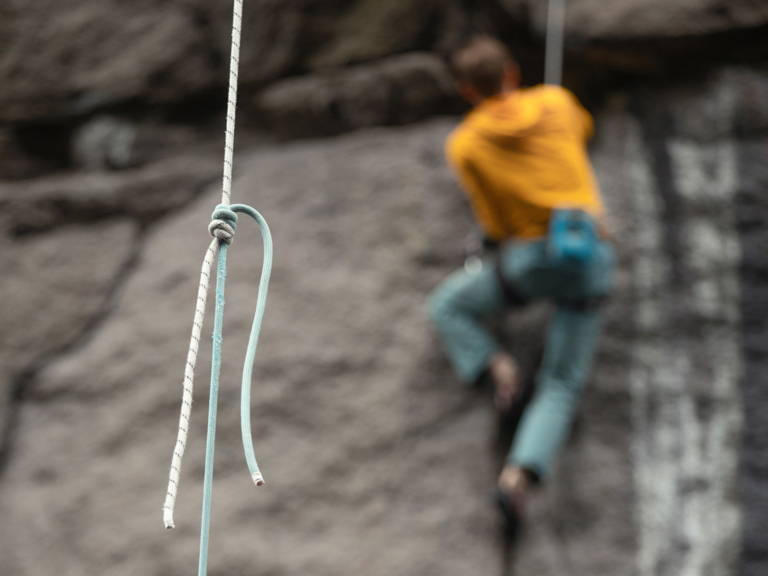 The route is so long that Pete had to tie two ropes together to work it.
Three more moves landed me at the final stab to a thin hand jam. Slightly shallow and tucked into a corner, the jam wasn’t a sinker. The corner helped it feel more secure, but the shallowness can spit you out when you’re pumped. It shouldn’t be a stab if you’re fresh enough—I certainly wasn’t, so I knew it would be a “chuck and hope for the best.”
I dropped my knee as low as possible to stay close to the rock and get more reach. My hips dragged me away from the wall. I had no choice but to plunge for the jam; wait another second and I’d be miles off it. But go for it now, and there could be a miracle.
For a split second my hand is seated; the corner is keeping my jam in place. But my lower body is too far out, and already my hips are pulling me off the wall. A sixth miracle was really too much to hope for. Tension lost, my foot pops and I launch into air time.
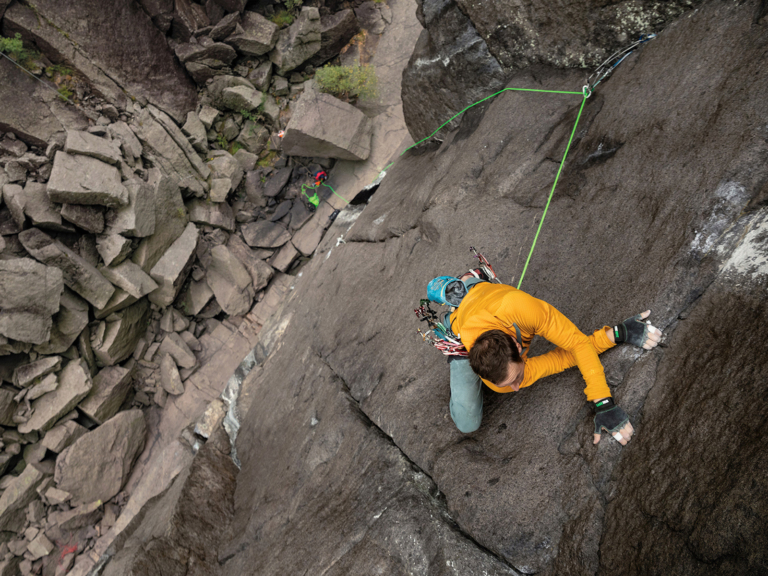 The easiest part of the route makes a small traverse right to gain the base of the crack in the upper headwall. Long runners (and long runouts) are helpful to prevent rope drag on this section of the climb.
The ride down is big. I’d run it out to save energy on carrying and placing gear, so I fall past the third crux, past the rest and down below where I should have fallen half an hour ago.
Whenever I redpoint, I always give full effort, but when I fall, I always feel like I could have given more. It’s a frustrating feeling, and one I have now whilst dangling on the end of the rope like a deflated balloon, limp and heavy with the weight of lactic acid.
However, it’s those moments just after the falls that really count. That feeling of “I could have done more” is what pushes me to give one more go, one more effort. Even if we think we’ve given everything, there is always another drop left in the tank. You don’t get extra chances without trying.


For the last 15 years, Pete has made it his goal to repeat and establish the hardest cracks and share knowledge learned along the way. Pete got his seventh chance when he accomplished the first ascent of and named Crown Royale (9a/5.14d), one of the world’s hardest crack climbs.