Opening image: The first signs of the algal bloom were seen along vast areas of the South Australian coastline in early March, with ocean temps 2.5˚C above average. Photo courtesy Surfers For Climate

Sea-Sick: Inside the South Australian Algal Bloom

For months, the images filtered through my phone like slow poison – leafy sea dragons belly-up in the brown foam, stingrays limp on the shore, fish gasping for breath in a sea that could no longer support them. A coastline I’ve surfed, loved, and learned from was dying, and I could do nothing but watch.

My heart lodged itself in my throat. This is my worst nightmare: an ocean so sick she can’t carry her life anymore. And the science is clear—this isn't a mystery. It's climate change made visible, made visceral. A perfect storm of warm water, sunlight and excess nutrients, turbocharged by a heating planet, giving rise to a toxic algal bloom – Karenia mikimotoi – stretching two times the size of Canberra across South Australia's coast.


Enough watching. I needed to go. To witness. To listen. To stand beside the coastal communities who were breathing this in, day after day.


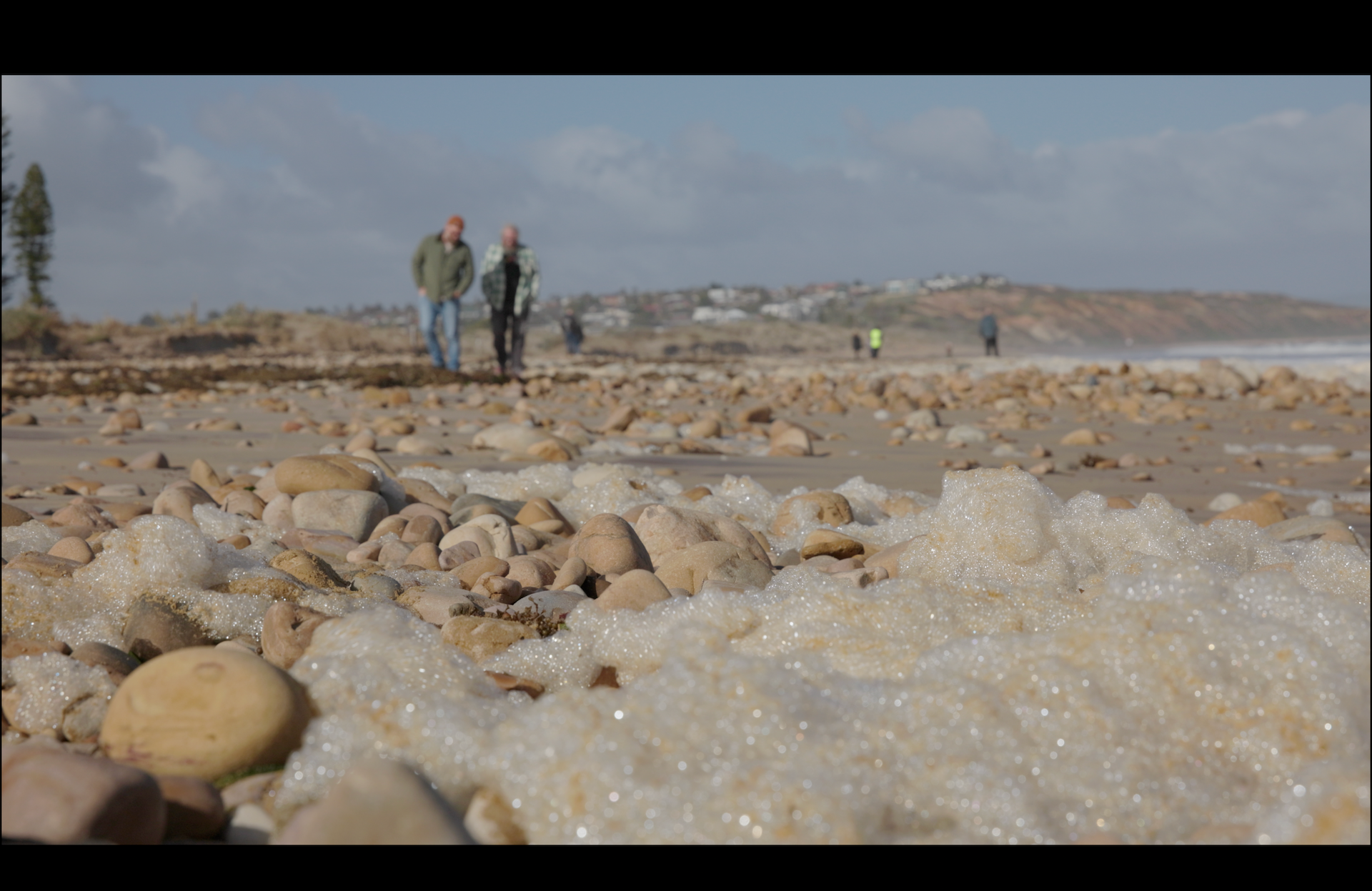
Our Surfers for Climate crew touched down as the algae filled St Vincent Gulf. First stop: Moana Beach. A brown scum blanketed the shore. The smell? Fermented seaweed and sorrow. Tiny crabs, fish, even stingrays lay tangled in the foam, their outlines barely visible under the death-drenched seagrass. Within half an hour, my eyes stung, my chest tightened. This wasn’t abstract. This was real.

Just inland from the beach, we sought shelter with the crew at Daily Grind – a family-owned surf and skate shop in McLaren Vale. Boards stacked like candy on the walls. A warm coffee in hand. Groms curled on couches, telling us how they hadn’t surfed in weeks. How the ocean they love had made them sick. How they didn’t know when – or if – it would feel safe to paddle out again.

Further south, the water looked clearer but the impact lingered. Warning signs at every beach. Locals surfing through scratchy throats and itchy eyes just to feel human again. Thirty of us hit a corner near Victor Harbor for a wintery session. The swell was up, the wind offshore, but you could feel it in the lineup – this hollow space between stoke and sickness. After the session I too was hit with a wave of minor flu-like symptoms for the next 24 hours – just a small taste of a South Australian surfer’s reality.
While the algal bloom has been hazardous to surfers, it’s been devastating to the marine environment, killing thousands of sea creatures with over 400 species being effected. Photo courtesy Surfers For Climate

And it wasn’t just surfers. At every stop, people spoke about what they'd lost. Fisherfolk – recreational and commercial – forced to stay ashore. Sailors grounded at Goolwa. Beachgoers avoiding the coast. Dog walkers keeping to the streets. Mental health slipping as saltwater rituals vanished.

“This isn’t just a patch of seaweed,” one local told me. “It’s our livelihoods, our connection, our way of life.”

What haunted me most was the silence from further up the chain. If this had happened at Bondi or Byron, would the nation be paying more attention? South Australians told us they feel forgotten. But this isn’t just their problem. With the right conditions – heat, runoff, stillness – this could happen anywhere. At your break. In your bay.

It was a relief to meet with State Environment Minister Susan Close, who’s working to unlock support for local businesses and funding for more science. The truth is clear – and it's harder to swallow. This is what climate change looks like. And it’s not going away.

What we need now is action. Real investment in marine science. Proper support for coastal businesses and surf communities. Updates to disaster frameworks that reflect climate realities. And above all, protection for our blue backyard – more marine sanctuaries, better water management, less pollution, meaningful climate action and the collective will to change.

Because the ocean’s not a backdrop. She’s the beating heart. And right now, she’s calling for help.

Don’t leave your head buried in the white east coast sand. Please take the time to watch this short film Sea-Sick from Surfers for Climate. Listen to the experiences of the community, learn from the specialists about the disaster that is unfolding on Australian shores and take action now.

Opening image: The first signs of the algal bloom were seen along vast areas of the South Australian coastline in early March, with ocean temps 2.5˚C above average. Photo courtesy Surfers For Climate

Subscribe

"I recently discovered Roaring Journals... wild, cool people doing wild, cool things."

Related Stories Related Stories Related Stories Related Stories Related Stories Related Stories Related Stories Related Stories Related Stories Related Stories